
Keep answers the whole team can use
If every poster, package or presentation begins by asking again who the customer is and what the business offers, earlier decisions may not have become accessible materials. They may be scattered across chats and folders, easy for an original contributor to find but difficult for someone taking over to judge.
Start with frequently used items: the approved company introduction, key messages, product facts, supporting information and visual standards. Give each a clear current entry point and explain the question it helps answer. The value lies in enabling the next task, rather than accumulating the largest number of files.
Separate stable elements from adaptations
The brand name, logo relationships, approved product facts and main reason to choose usually provide a foundation for new work. Headline angles, length, image-to-text balance and layout need to respond to the audience, channel and size. Distinguishing these roles supports consistency while allowing the design to suit its use.
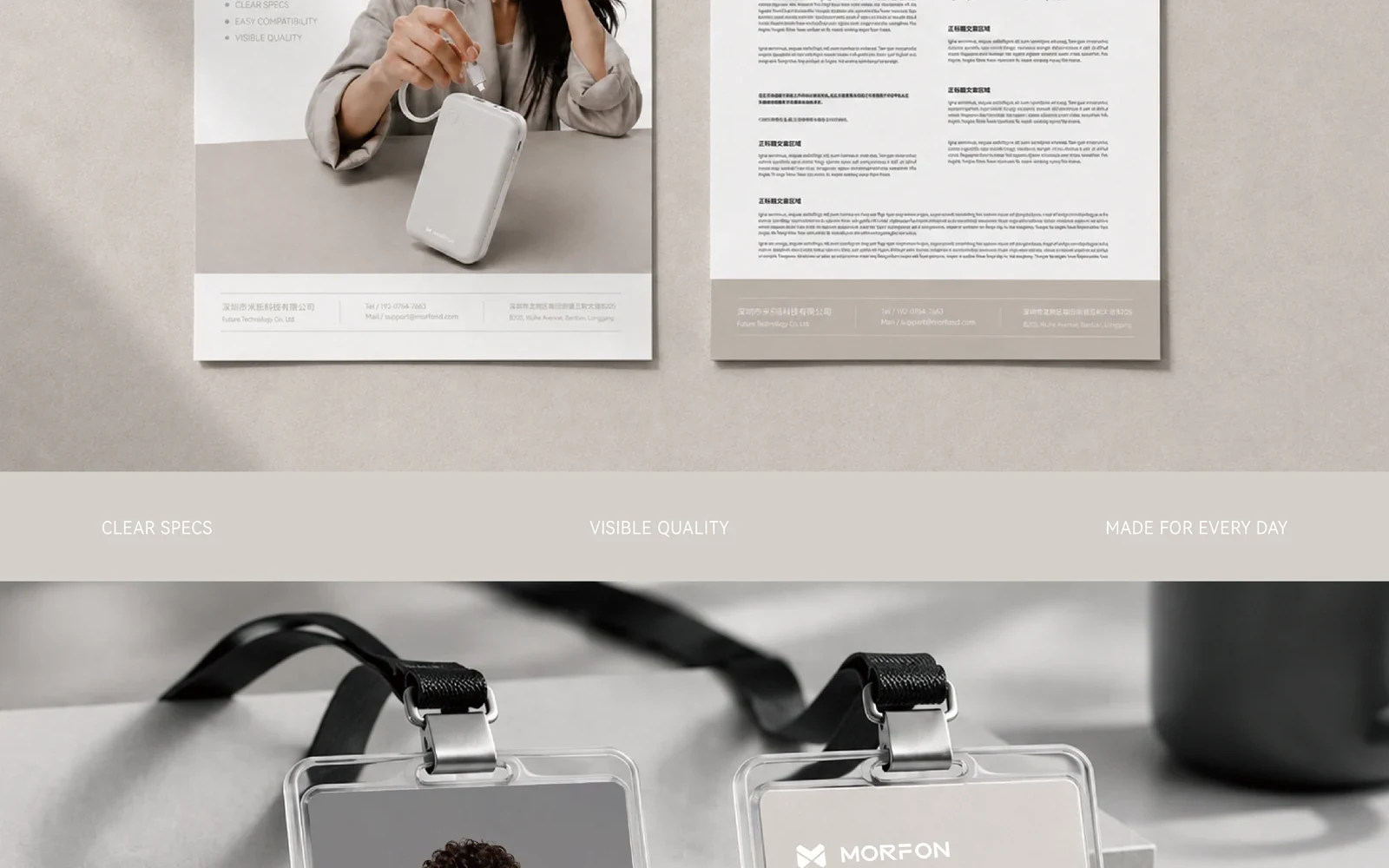
Imagine adapting a product introduction into an exhibition poster. The facts and main advantage can remain, but the reading order needs reconsideration. What should be visible at a distance? What becomes useful closer up? Does the poster need a route to further discussion? Those questions require more than scaling the original page.
A mobile image likewise need not reproduce every brochure paragraph. Retain the central message, then decide whether a headline, explanation or diagram best carries it. The form changes while the information continues to correspond.
Add a short usage note to the files
Alongside preview and editable files, record the material's name, purpose, approval date and intended audience. The next user should understand why it exists, which earlier version it replaces and what can be reused. A short accompanying note can provide that context.
Identify information to check again, such as prices, specifications, product images or temporary campaign details. Clarify permitted uses of logos, fonts, photography and other materials too. Keeping those conditions with the files reduces the need to search old conversations each time.
The note can be simple: name and purpose, current version, reusable elements, items needing review, and file or material usage conditions. Begin by making regular resources easy to locate and understand.
Organise frequent-use materials first
The next design task need not wait for every historical file to be organised. Start with the company introduction, priority product information and core brand files in regular use. Confirm their current versions, then return newly approved work to the appropriate location as projects continue.
Older versions can remain available, but distinguish them from current ones. Similar covers, product introductions from different stages and multiple exports should be labelled so users can identify the version suitable now. Repeatedly adding the word final is usually less informative than a clear purpose and approval date.
Responsibilities also need to be clear. Someone approves business information, someone organises design files and someone informs the people who use them. Existing team members can fill these roles. Updated information should be findable by more than the person who created it.
Bring usage feedback into the next update
Real use reveals new needs: sales repeatedly adds an explanation, a designer cannot find a required size, or customers keep asking the same question. These observations can guide updates, helping the assets improve through use rather than remain unchanged after handover.
If AI helps organise information or draft content, provide the current files, intended use and relevant background together. Make clear which facts are approved and which details change over time. That gives the team a basis for checking whether the output still reflects the current message.
After each task, retain usable outputs and guidance, then update them through actual feedback. The resulting assets help sales, design and content contributors continue from a shared foundation.